
CPGRAMS -- an online platform available to citizens 24x7 to lodge their grievances to public authorities on service delivery -- has existed for close to two decades. But it has never been this active, points out Tamal Bandyopadhyay.

An influential US lawmaker claims his visit to India helped catalyze "early signals" that New Delhi may reduce its imports of Russian oil, a step he described as "meaningful" in weakening Moscow's ability to fund its war in Ukraine.

Congress leader Sonia Gandhi criticizes the Modi government's stance on Palestine, calling it a 'profound silence' and an abdication of humanity and morality. She argues that India needs to demonstrate leadership on the issue and that the government's actions are driven by personal friendship rather than constitutional values or strategic interests.
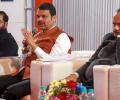
Shiv Sena's Dadaji Bhuse is the new school education minister while Uday Samant continues to be the industries minister.
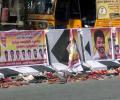
'Karur could still impact Jana Nayagan's box-office success if Vijay and the TVK do not get their act together,' points out N Sathiya Moorthy.

Jharkhand Chief Minister Hemant Soren has distributed portfolios among the new ministers, keeping key departments such as Home, Personnel, and several others to himself. The Congress' Radhakrishna Kishore was given Finance, Commercial Tax, Planning and Development Department, and Parliamentary Affairs departments. JMM's Deepak Biruwa was allotted the departments of Revenue, Registration and Land Reforms (non-registration), and Transport. Chamra Linda, another JMM leader, was allotted the departments of Schedule Tribes, Scheduled Castes, Backward Classes (except Minority Welfare). RJD's Sanjay Prasad Yadav was given the departments of Industries, and Labour, Planning, Training and Skill Development. The Congress' Irfan Ansari got Health, Medical Education and Family Welfare, besides Food, Public Distribution and Consumer Affairs, and Disaster Management departments. The chief minister also kept to himself the departments of Cabinet Secretariat, Personnel, Administrative Reforms and Official Language, Road Construction, Building Construction, and those departments yet to be distributed to anyone. Among the other ministers, JMM's Ramdas Soren was given the School Education and Literacy, and Registration departments. Party colleague Hafizul Hasan was allotted the departments of Water Resources, and Minority Welfare Department. Panchayati Raj, Rural Works, and Rural Development departments were given to Congress MLA Deepika Pandey Singh. The CM gave Drinking Water and Sanitation, and Excise and Prohibition departments to JMM's Yogendra Prasad. JMM legislator Sudhivya Kumar became the minister for Urban Development and Housing, Higher and Technical Education, and Tourism, Art Culture, Sports and Youth Affairs departments. Shilpi Neha Tirkey of the Congress was allotted Agriculture, Animal Husbandry and Cooperative Department. A total of 11 MLAs took oath as ministers in the Hemant Soren government in Jharkhand on Thursday.

The famous 'tareekh pe tareekh' dialogue from the Hindi movie Damini captures where we are now.

'There is no retrospective changing of the law, only its simplification.'

India's goods exports rebounded in July after two months of contraction, with outbound shipments rising 7.3 per cent to $37.24 billion, led by a surge in exports to the United States before the country's reciprocal tariff kicked in and bolstered by a recovery in exports to other key markets.
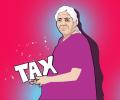
'The new Bill introduces no policy or rate changes, leaving financial planning strategies largely unaffected.'
'The considerations for choosing between the old and new tax regimes remain essentially unchanged.'
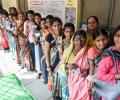
Former chief justices of India, who have conveyed their views to a parliamentary committee on the bill proposing simultaneous polls, have endorsed the constitutionality of the 'one nation, one election' concept but have raised concerns over its various aspects, including the power given to the Election Commission, and offered suggestions.
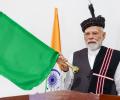
In the last 11 years, India and the world witnessed what he stood for, what he promised and did not deliver, and what he actually stood for and practised without fearing how history would judge him. Modi's tenure has been punctuated with headline-grabbing decisions, symbolic gestures, and stage-managed moments that continue to define his leadership and India's politics, points out Ramesh Menon.
Tharoor also said he is honoured by the invitation of the government to lead an all-party delegation to five key capitals to present the nation's point of view on recent events.
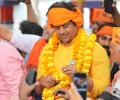
BJP MP and actor Ravi Kishan has been awarded the Sansad Ratna for his outstanding performance in the Lok Sabha, becoming the first actor-turned-politician to receive the honour.

'Operation Sindoor is still ongoing. The Prime Minister himself said that blood and water cannot flow together, that talks and terrorism cannot go together. So how can we have a cricket match with a country that indulges in terrorism?'

'The original provision will be restored. AMT is meant only for those claiming deductions, not for firms earning regular income like capital gains,' a senior government official said.
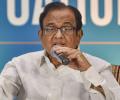
Rajya Sabha chairman Jagdeep Dhankhar on Tuesday nominated former home minister and Congress member P Chidambaram to the department-related parliamentary standing committee on home affairs.

Government sources said amendments were being considered to the Atomic Energy Act to allow private sector participation and the Civil Liability for Nuclear Damage Act to limit the liability on suppliers of equipment to build atomic energy plants.
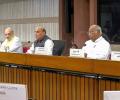
The Indian government briefed an all-party meeting on Thursday on the success of "Operation Sindoor", the retaliatory airstrikes against Pakistan following the Pahalgam terror attack. Top government functionaries and opposition leaders met for a second time in a fortnight amid rising tensions between India and Pakistan. The meeting was chaired by Union Home Minister Rajnath Singh and attended by several prominent leaders from various political parties. The government highlighted the strikes on nine terror targets in Pakistan and Pakistan-occupied Kashmir, including the Jaish-e-Mohammad stronghold of Bahawalpur and Lashkar-e-Taiba's base Muridke.
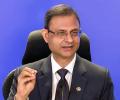
Reserve Bank Governor Sanjay Malhotra on Saturday said that the market forces decide the value of rupee with respect to the US dollar and the central bank is not worried about day-to-day movement of the currency value.

Led by Nationalist Congress Party-Sharadchandra Pawar MP Supriya Sule, Group 7 will engage with key countries in Africa -- Egypt, South Africa, Ethiopia -- and Qatar to present India's position on Operation Sindoor, launched in response to the April 22 Pahalgam terror attack.
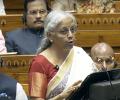
Here are some facts related to the Budget presentation in independent India.

Singapore's long-ruling People's Action Party (PAP), led by Prime Minister Lawrence Wong, has secured a landslide victory in the country's general election. The PAP won 87 of 97 seats, with voters endorsing the party's focus on stability and economic security amidst global uncertainties. Wong expressed gratitude for the strong mandate and vowed to tackle concerns about the cost of living and housing. The results mark a significant win for the PAP, which has been in power since Singapore's independence in 1965.

Finance Minister Nirmala Sitharaman on February 1 will present a record eighth consecutive budget that is expected to contain measures to shore up weakening economic growth and ease the burden on the middle class struggling with high prices and stagnant wage growth while being fiscally prudent.

An Indian delegation led by the BJP's Ravi Shankar Prasad will tour key European capitals to expose Pakistan's role in cross-border terrorism and State-sponsored extremism.
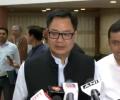
Defence Minister Rajnath Singh told an all-party meeting that at least 100 terrorists were killed in the Indian strikes on terror sites in Pakistan and Pakistan-occupied Kashmir under 'Operation Sindoor'. Leaders from various parties showed maturity and extended all support to the government and armed forces.
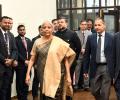
Finance Minister Nirmala Sitharaman on Saturday said she is likely to introduce the new income tax bill, which will replace the six-decade-old I-T Act, in the Lok Sabha in the coming week.

The President will address both the Houses of Parliament assembled together in the Lok Sabha chamber on Friday and Finance Minister Nirmala Sitharaman will present the General Budget on Saturday.
The Indian government has increased the salaries of Members of Parliament (MPs) by 24 percent, effective April 1, 2023. This increase was based on the Cost Inflation Index and brings their monthly salary to Rs 1.24 lakh. The notification also included increases in daily allowances for sitting members, pension, and additional pension for former MPs. While some MPs welcomed the increase, others expressed dissatisfaction and instead advocated for a rise in the MP Local Area Development Fund (MPLADS). The increase has been implemented based on the Salary, Allowances and Pension of Members of Parliament Act and the Cost Inflation Index specified in the Income Tax Act of 1961.
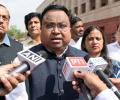
Senior leaders of the Biju Janata Dal (BJD) in India are calling for action against Rajya Sabha MP and national spokesperson Sasmit Patra for allegedly creating confusion among lawmakers regarding the Waqf (Amendment) Bill. The controversy arose after Patra, despite the party's announced opposition to the Bill, revealed he had voted in favor of it and stated that MPs could vote according to their conscience. The situation has led to accusations of a possible "deal" between the BJD and the Bharatiya Janata Party (BJP).
Bharatiya Janata Party on Thursday issued a three-line whip to all of its Lok Sabha MPs asking them to be present in the House for the passing of the Union Budget 2025-26.

Parliamentary Affairs Minister Kiren Rijiju on Monday urged all political parties, including the Congress, to unite against anti-India forces, and raise their voice if they find their leaders working against the country's interest.
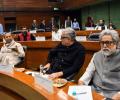
India's Parliament is set to begin its Budget session on Friday, with opposition parties poised to demand a discussion on the alleged mismanagement of the Maha Kumbh festival in Prayagraj, where 30 pilgrims died in a stampede. The opposition also accused the government of politicising parliamentary committees and pushing its agenda through its majority. The session will start with President Droupadi Murmu addressing both houses of Parliament. Finance Minister Nirmala Sitharaman will present the Union Budget on Saturday for the eighth consecutive time.
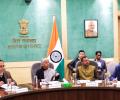
Parliament's Budget Session will be held from January 31 to April 4, with Finance Minister Nirmala Sitharaman set to table her eighth straight budget on February 1. The session will begin with President Droupadi Murmu's address to a joint sitting of the Lok Sabha and Rajya Sabha on January 31, followed by the tabling of the economic survey. The first part of the Budget Session will have nine sittings from January 31 to February 13, after which Parliament will break for recess to examine the budget proposals. The session will reconvene on March 10 to discuss the demands for grants of various ministries and complete the budgetary process, concluding on April 4.
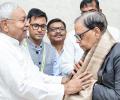
Bihar Chief Minister Nitish Kumar launched a scathing attack on his predecessor Rabri Devi, calling her appointment as Chief Minister "suspension-induced" during a heated debate in the state legislative council. The verbal sparring, marked by accusations and counter-accusations on law and order, saw Kumar accusing the RJD of being unable to handle Hindu-Muslim tensions and engaging in "mischief." Rabri Devi, in response, asserted her right to speak about her achievements during her tenure as Chief Minister. Kumar, however, retorted with a sharp, local phrase, dismissing Rabri Devi's claims. The exchange, which saw both sides engage in mudslinging, ended with the Chairman admonishing the opposition for their unruly behavior.
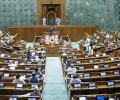
The deportation of Indians from the United States, deaths in the Maha Kumbh stampede and the joint Parliamentary committee report on the Waqf bill were among the issues that led to heated exchanges and some disruptions in an otherwise smooth first part of the Budget session that ended on Thursday.
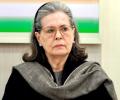
Noting that these three Cs haunt Indian education today, the Congress Parliamentary Party chairperson said in an article that this "carnage" of India's public education system must end.
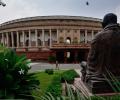
Shashi Tharoor has also been retained as the chairman of the panel on Information Technology.
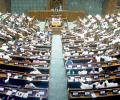
Parliament's approval of the Waqf (Amendment) Bill, a contentious piece of legislation aimed at reforming Waqf bodies, has sparked strong reactions from the opposition, who allege that the bill was "bulldozed" through Parliament. The bill, considered the government's most consequential legislation in its third term, was passed with comfortable majorities in both the Lok Sabha and Rajya Sabha despite opposition claims of a lack of consultation and an intrusion into religious affairs. Other notable bills approved during the session included the Finance Bill, Appropriation Bill, Immigration and Foreigners Bill, and Tribhuvan Sahkari University Bill. The session, which saw high productivity, also witnessed debates on issues such as economic distress, delimitation, and the three-language policy. While the government touted its achievements, the opposition criticized the government's approach and vowed to challenge the Waqf bill in court.

Opposition parties have not been given the chairmanship of any of the four key parliamentary panels including the committee on home affairs and information technology, which were with the Congress, in the latest rejig announced on Tuesday.
 © 2026 Rediff.com - Advertise with us - Disclaimer - Privacy Policy - Sitemap - Feedback - About us - Terms of use - Grievances